Publish date: 20 October 2026
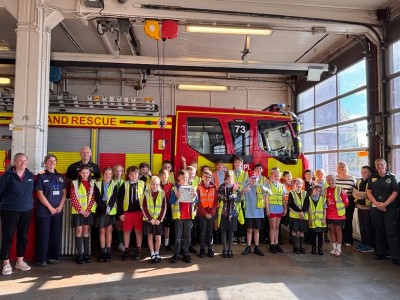
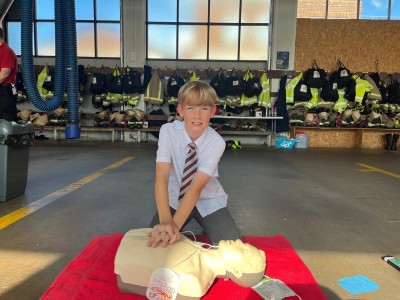
To mark Restart a Heart Day on 16 October, ambulance service staff and volunteers welcomed more than 550 students from 17 schools to fire stations across the Island, where they learned how to carry out CPR and use a defibrillator. Over the past decade, more than 10,000 children have been trained by the Ambulance Training & Community Response Services.
The sessions are designed not only to teach young people what to do if someone suffers a cardiac arrest, but to give them the confidence to step forward and act in an emergency.
Eight in ten out-of-hospital cardiac arrests happen at home, meaning the person who needs help could be a parent, grandparent, friend or other loved one. Starting CPR while an ambulance is on its way can significantly increase someone’s chance of survival.
With more public access defibrillators available across communities, knowing how to perform CPR and use a defibrillator are important skills.
Louise Walker, Head of Education and Community Response at Isle of Wight Ambulance Service, said, “Teaching children CPR is an important part of improving survival from out-of-hospital cardiac arrest. Giving children and young people not only the skills, but the confidence to act, can make a huge difference.
“We always hope they will never need to use what they have learnt, but we that often it is a family member, friend or colleague who must step in and start CPR before an ambulance arrives. We want young people to leave these sessions knowing that if the worst happens, they can do something to help.
“Thank you to everyone who has helped make these sessions possible, and to the schools, teachers and students who have embraced the training so enthusiastically.”
For anyone faced with a cardiac arrest, Louise has one particularly important message: don’t be afraid to act.
She added, “People shouldn’t be worried about starting CPR because they are afraid they might get it wrong. Doing something is better than doing nothing.”
Someone who knows just how important that quick action can be is Laura Summers, who suffered a cardiac arrest at the school where she worked.
Laura said: “I feel so lucky looking back that my friends and colleagues jumped into action quickly and started CPR while we waited for the ambulance to arrive. My heart had stopped for three minutes and, through their quick thinking and use of a defibrillator, I am here today.”
Laura now helps raise awareness of cardiac arrest and the importance of CPR. As part of this year’s Restart a Heart activities, she visited Newport Fire Station to meet some of the children taking part and thank them for learning a skill that could one day help save someone else’s life.
Small Island, Big Heart
The training forms part of Small Island, Big Heart, an Isle of Wight Ambulance Service project supported by national funding.
The project builds on work already taking place across the Island to improve survival following cardiac arrest by increasing access to CPR training and Public Access Defibrillators (PADs), as well as providing further support for survivors, co-survivors and bystanders.
This includes developing the Isle of Wight Ambulance Life After Cardiac Arrest (LACA) network, which connects people affected by cardiac arrest with others who understand what they have experienced.
Through Small Island, Big Heart, the ambulance service is working to increase awareness of the network and ensure more survivors, families and others affected by cardiac arrest can access support.
Anyone who has survived a cardiac arrest, or supported someone through one, and would like to find out more about the LACA network can visit www.iow.nhs.uk/LACA or call 01983 534111.