Publish date: 28 September 2026
More than 350 Island patients have taken part in clinical research through the Isle of Wight Ambulance Service (IWAS), helping to explore new ways of improving emergency care.
Since 2024, IWAS has been involved in three clinical trials, RAPID2, CRASH-4 and the Spinal Immobilisation Study (SIS).
Despite being one of the country's smaller ambulance services, IWAS has made a strong contribution to the trials. At one stage, it was the only ambulance service actively recruiting to RAPID2, helping to keep the study going.
RAPID2 compares standard pain relief with a local anaesthetic injection given by paramedics to patients with a suspected hip fracture. The study is looking at whether it can provide effective pain relief before patients reach hospital, while potentially reducing the need for morphine and its associated side effects.
For people aged over 50 with a mild traumatic brain injury, CRASH-4 investigates whether a medicine that helps protect blood clots can reduce bleeding in the brain and improve outcomes.
Although IWAS joined CRASH-4 later than some other ambulance services, its recruitment has been strong relative to the size of the service and Island population, with over 110 Island participants involved so far.
SIS looked at care for patients with a suspected spinal injury. It compared traditional methods of keeping patients still, using collars and supports, with a less restrictive approach that may be more comfortable for patients. Despite joining the study late, IWAS successfully recruited 77 patients before the study closed.
Together, the studies give eligible Island patients the opportunity to take part in research from the point they receive emergency care and could help shape the way ambulance clinicians care for patients in the future.
The research portfolio was also recognised by the Care Quality Commission (CQC) during its 2026 assessment of the ambulance service, with inspectors highlighting opportunities for staff to take part in research across areas including hip fracture, spinal injury, and minor head injury.
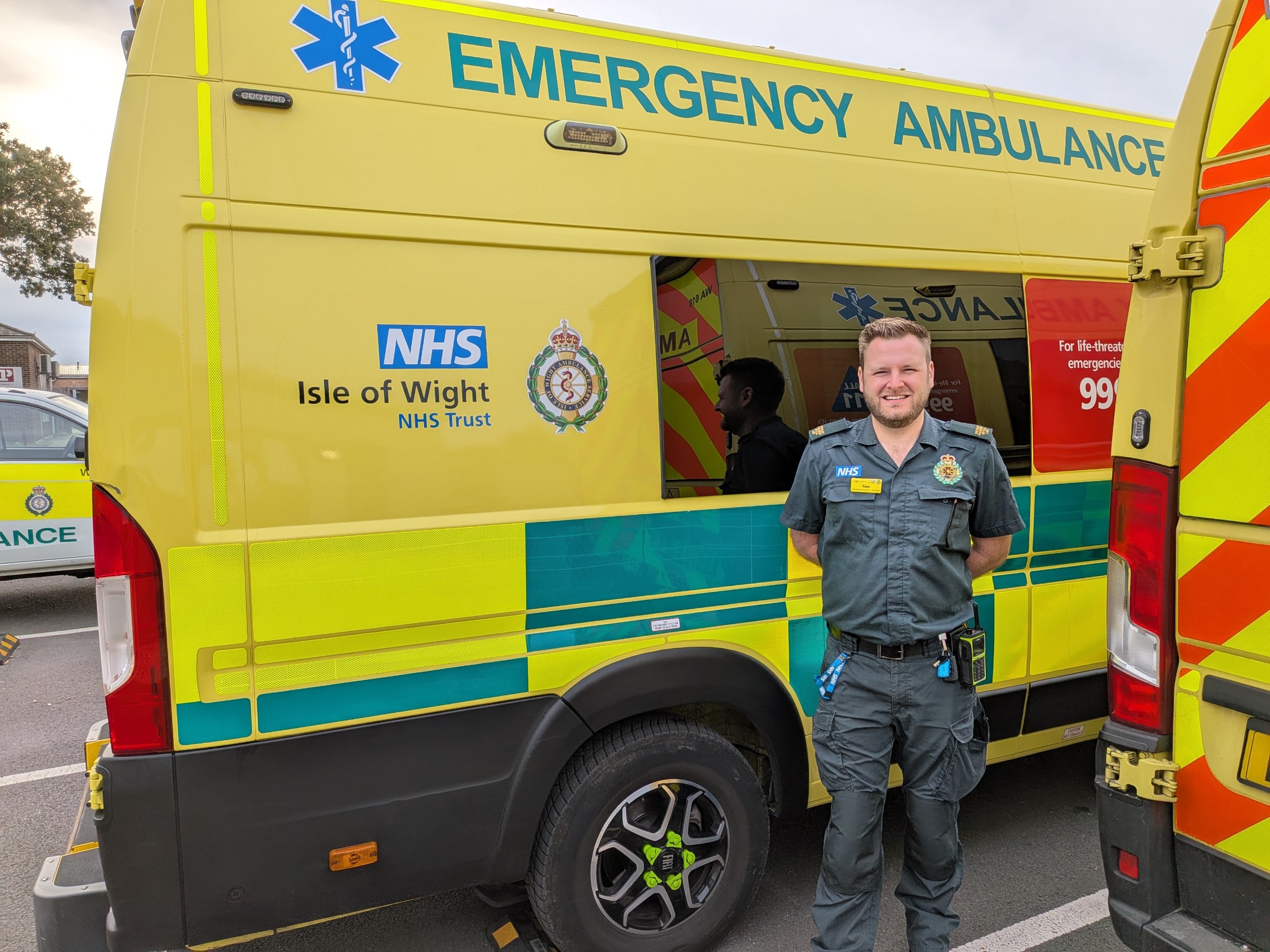
Tom Gleeson-Hammerton, Specialist Paramedic, said: “Patients at the roadside deserve just as much evidence-based care and access to improved treatments as those in a hospital bed.
“We are indebted to hundreds of our ambulance patients who have agreed to participate in these trials. To have gone from no research activity to providing a significant contribution to these large national trials in just a few years is a massive achievement.
“This would not have been possible without the enthusiasm and commitment of our ambulance colleagues, our research and development teams at Isle of Wight NHS Trust, and our patients.
“The results of these studies will be seen by clinicians and services across the UK and beyond. Together, we are helping to improve emergency care not just on the Island, but further afield.”
Victoria White, Director of Ambulance, said: “The CQC’s recognition of our research activity is particularly important because it shows that, despite our size and Island geography, we are creating meaningful opportunities for patients and staff to contribute to improvements in emergency care.
“I am incredibly proud of our frontline teams, who have embedded research into everyday clinical practice while continuing to provide compassionate and timely care.
“We will continue to seek opportunities to take part in national and collaborative research, helping ensure Island patients can benefit from the latest developments in emergency care.”